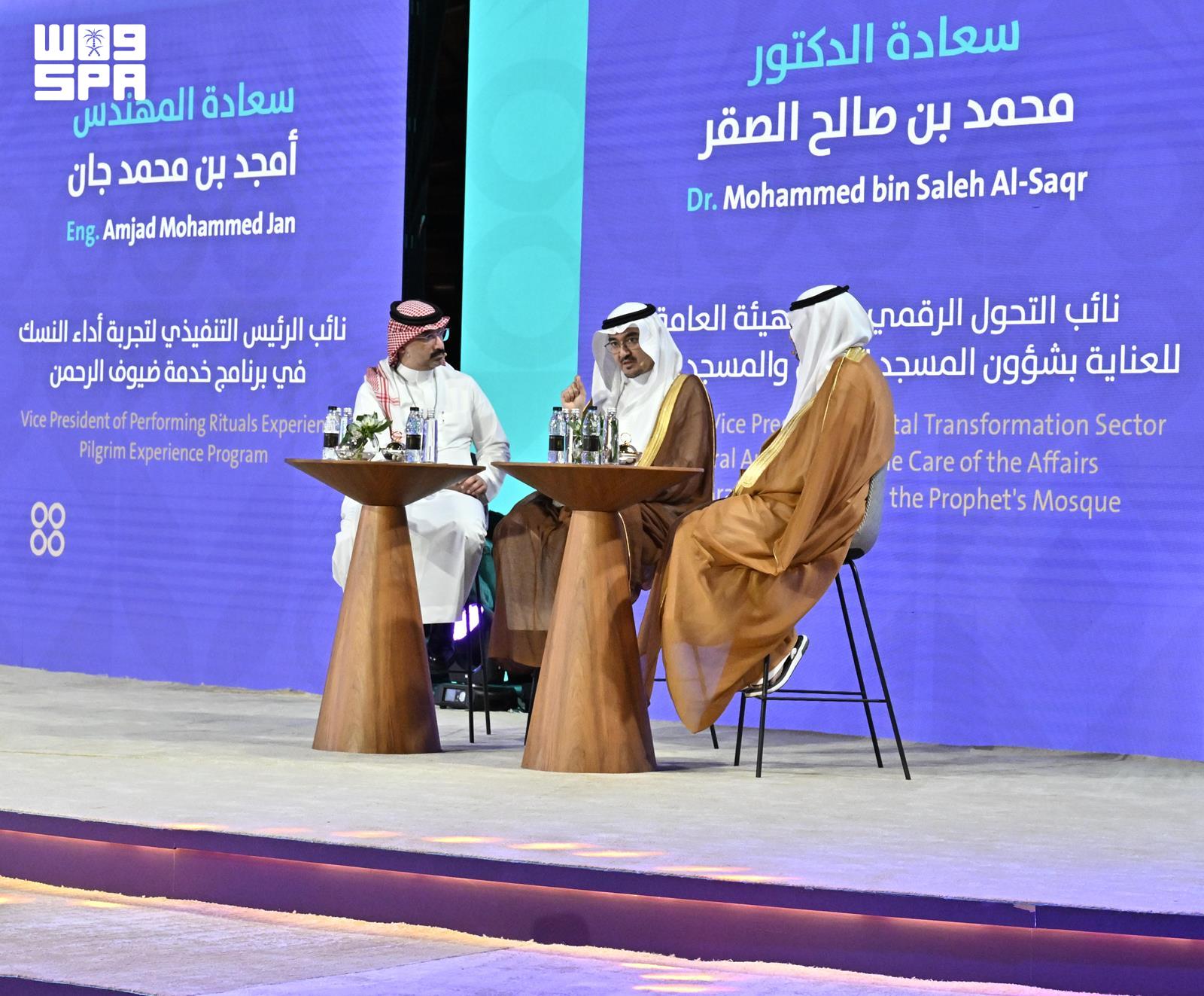

Hajj Conference Discusses Transformation of Pilgrim Experience in Performing Rituals
The sixth Hajj Conference and Exhibition in Jeddah discussed on Wednesday the transformation of the pilgrim experience during a panel titled “Transforming the Pilgrims' Experience in Performing the Rituals,” held under the Development and Sustainability track.
The session discussed the role of technological integration among national platforms, including Nusuk, Absher, and Tawakkalna, in streamlining procedures for pilgrims through data exchange between government entities and reducing repeated data entry across service channels.
It also highlighted the use of the Nusuk Card as a unified identity card for pilgrims, easing access to services throughout their journey.
The session reviewed the development of digital services based on an assessment of pilgrims’ needs and Sharia and regulatory requirements, helping them identify facilities and routes and understand how to perform the rituals.
It examined the use of artificial intelligence and smart sensors to provide services through Nusuk, including automated tracking of the circuits performed during Tawaf, reducing counting errors and the time spent searching for routes.
The session discussed launching these solutions initially at the Two Holy Mosques, with plans to integrate them further with national applications to improve pilgrims’ access to services and ease their use.
It also reviewed the system for measuring pilgrim satisfaction, implemented in cooperation with the National Center for Performance Measurement “Adaa.”
The system covers more than 90 services across the various stages of the pilgrim journey, from their countries of origin to their return, to assess the impact of projects and improvements on their experience.
Moreover, the session noted that during the previous Ramadan season, Adaa processed more than 28,000 survey responses from people of 18 nationalities, gathered in more than seven languages.
The session pointed to an increase in satisfaction among Umrah performers from 82% in 2019 to 94% in 2025, and among pilgrims from 84% in 2019 to 93% during the most recent Hajj season.
It stressed the continued monitoring of pilgrims’ experiences at various touchpoints, analyzing challenges, identifying areas for improvement, and developing corrective action plans to enhance services.

 Facebook
 Twitter
 Whatsapp