
Makkah’s Smart Technology Transformation Enhances Grand Mosque Visitors’ Experience
Makkah is witnessing a significant transformation in the use of smart technology and digital applications to serve Umrah performers and visitors.
An integrated system utilizing modern technological solutions is facilitating the performance of rituals, organizing crowd movement, and improving service quality inside and around the Grand Mosque. The transformation reflects the rapid development of the Kingdom’s service system dedicated to worshippers.
Digital apps have become an essential part of the Umrah journey. Many trips now begin through electronic platforms that enable users to obtain permits, schedule appointments, and access guidance related to rituals and services. This helps simplify the pilgrim experience from the early planning stages of the visit to the completion of rituals at the Grand Mosque.
The “Nusuk” app, supervised by the Ministry of Hajj and Umrah, is the main digital platform for organizing pilgrimage services. It allows users to obtain Umrah and visit permits, manage travel details, and review services available to pilgrims. The platform also provides guidance to help visitors plan their journey within Makkah and Madinah.
These e-services offered by the authorities overseeing the Grand Mosque have also enhanced the visitor experience inside the sacred site. Various digital platforms provide live broadcasts of Friday sermons and religious lessons from the mosque in many languages. They also offer educational and awareness content that helps worshippers understand the teachings related to rituals and learn about Islamic landmarks associated with the mosque.
To streamline the performance of rituals within the mosque, the General Authority for the Care of the Two Holy Mosques’ unified mobility platform allows visitors to electronically reserve carts for Tawaf and Sa’i. The service helps regulate their use and facilitates access for the elderly and people with disabilities to perform their rituals, while improving the flow of movement within the mosque and its courtyards.
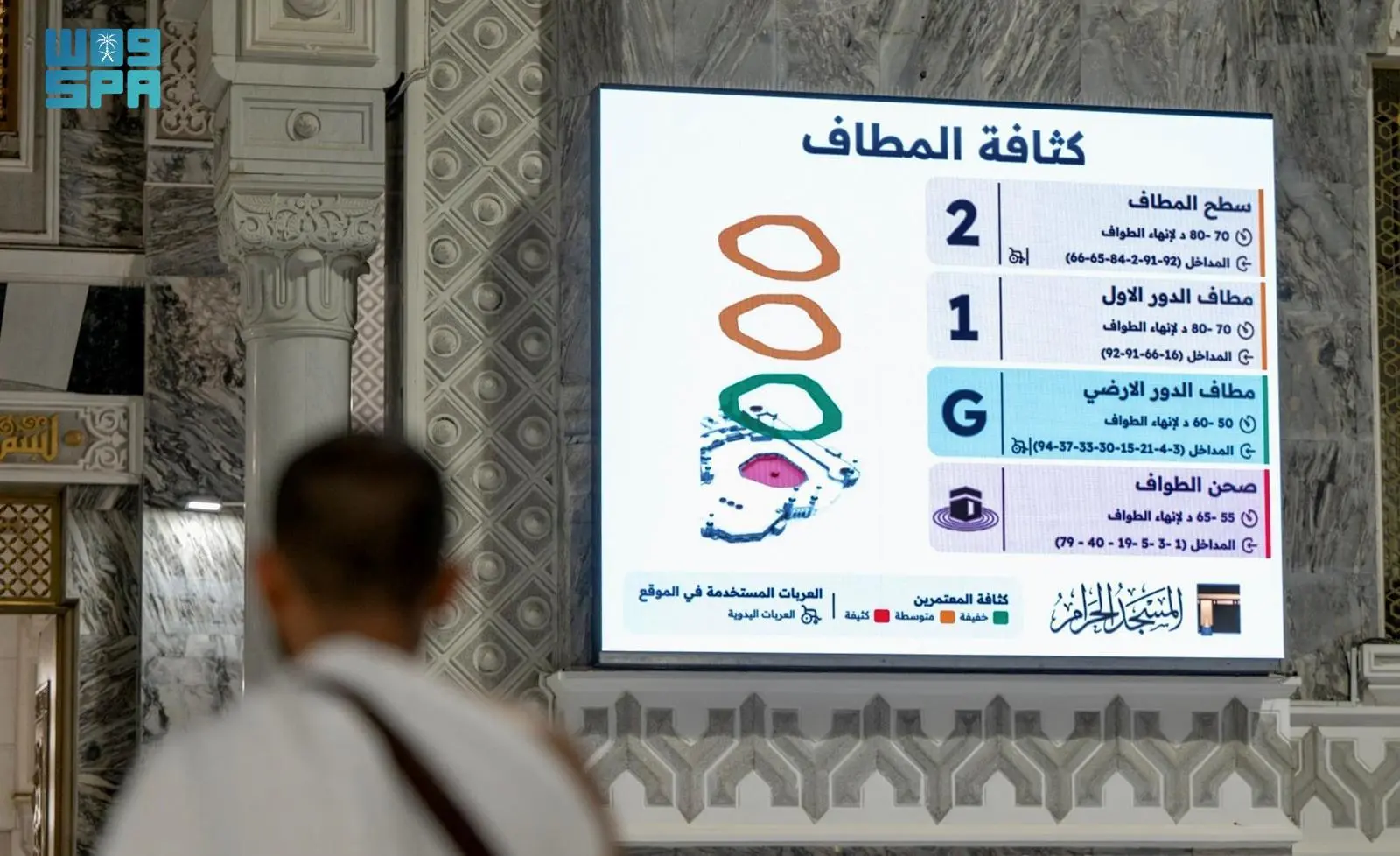
Smart technologies have also enhanced the field guidance system within the Grand Mosque through digital screens and multilingual smart signage installed throughout its corridors and courtyards. These systems provide real-time guidance on routes, entrances, and service locations, helping visitors navigate one of the most densely crowded gathering areas in the world.
As part of the Grand Mosque's technological transformation, multi-purpose smart robots have been introduced to provide guidance and awareness services in multiple languages. Sanitization robots are also operating to maintain public health inside the mosque, reflecting the use of advanced technology to serve visitors and improve the operational environment.
Authorities also utilize AI and big data analysis to monitor crowd movement inside the Grand Mosque and its courtyards. This enables operational teams to make immediate decisions to regulate human flows and direct visitors toward less crowded routes, enhancing safety and improving movement efficiency.
The use of smart technologies extends beyond the Grand Mosque to the wider services system in Makkah. Operational authorities rely on digital systems to manage transportation flows and organize bus and pedestrian routes in the central area. Smart maps and digital platforms also help visitors easily reach various locations and services across the city.
As part of efforts to develop smart infrastructure in the holy sites, the Royal Commission for Makkah City and Holy Sites and Kidana Development Company are implementing advanced technological projects to improve crowd management and develop the holy sites' digital infrastructure. All of these efforts are aimed at improving services for Hajj pilgrims and Umrah performers.

 Facebook
 Twitter
 Whatsapp